


 10.09.2026 05:01 AM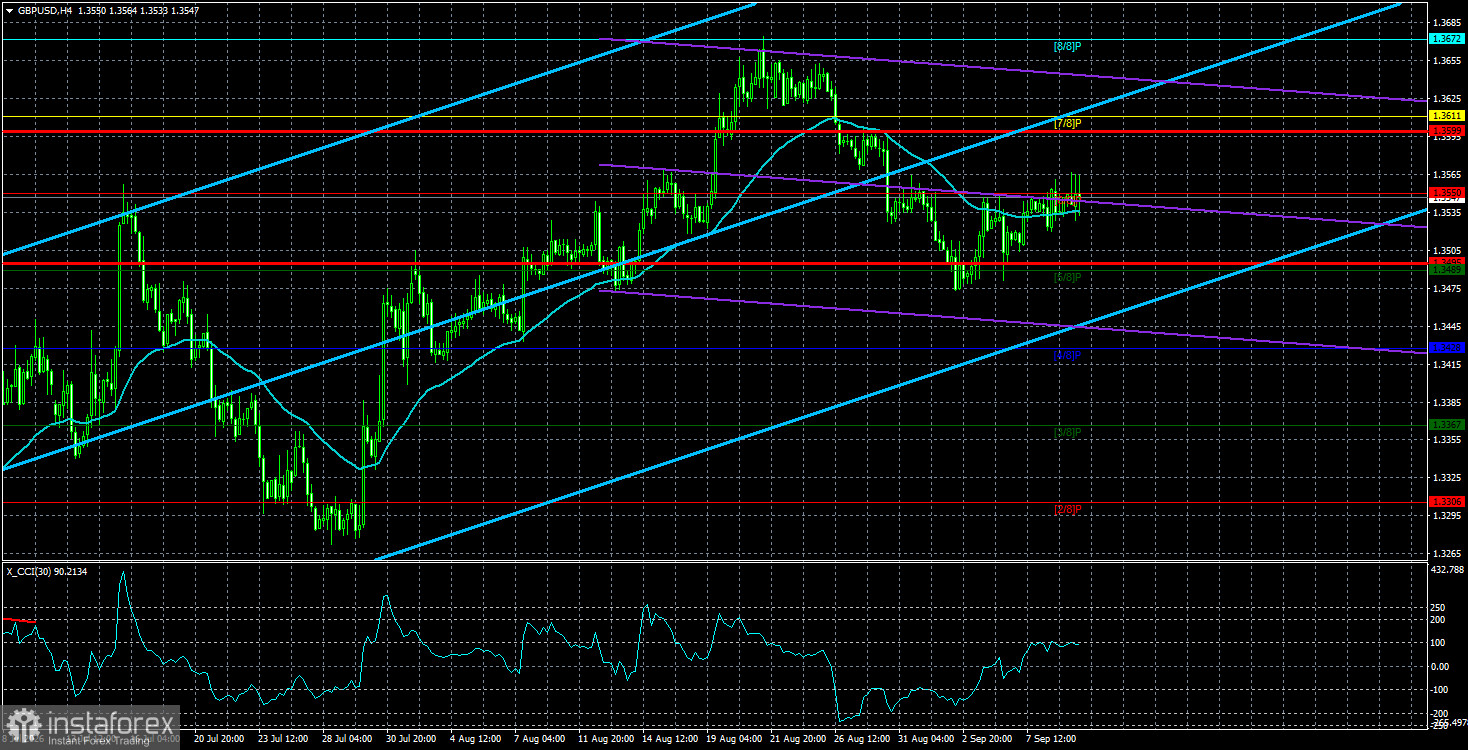
The GBP/USD pair continued to move very sluggishly on Wednesday, in no hurry to go anywhere. The pound retains the same solid upside prospects as the euro, but its volatility has been as low as the euro's for the past six weeks. On average, sterling moves about 50–60 pips per day right now — very little. Trading the pound is slightly more pleasant than the euro because it typically moves 50–60 pips rather than 30–40 pips, but the difference is not large.
Today's European Central Bank meeting will likely have little direct impact on the pound. Next week the Bank of England and the Federal Reserve meet, and that is when decisions will matter. Frankly, there is little to decide now: the Fed will very likely leave its key rate unchanged, and the BoE is not preparing to tighten policy either. So both meetings will likely pass without drama, and traders may feel disappointed because they expect hawkish measures. One might ask why market expectations are usually more hawkish than central banks' actual stance.
BoE Governor Andrew Bailey tried to answer this. He said there is no clear plan for future actions and the market expects too much from the BoE. In short, the BoE could raise rates, but it is neither the most favorable nor the priority scenario. UK inflation is not that high compared with the eurozone or the US, so why rush?
Interestingly, Bailey's practical dismissal of a September hike did not trigger a pound sell-off, again proving that the market currently follows the Fed above all. Fed officials are in a quiet period: representatives are prohibited from giving comments and interviews, especially on monetary policy, within 10 days of the meeting.
In addition, Kevin Warsh has implemented a new public-relations strategy and strongly opposes any hints or announcements of future action. It is unclear how Christopher Waller and John Williams spoke last week. However, both officials said that inflation is not high enough to prompt immediate tightening and noted continued disinflation in the US. If inflation is falling and will continue to fall, why would the Fed raise rates at all?
We continue to believe the Fed will not tighten in 2026. Forecasts can change — if tomorrow Trump starts a new war and oil spikes to $150/bbl, inflation could surge, and the Fed would have to act despite White House pressure. But today we do not expect tightening this year.
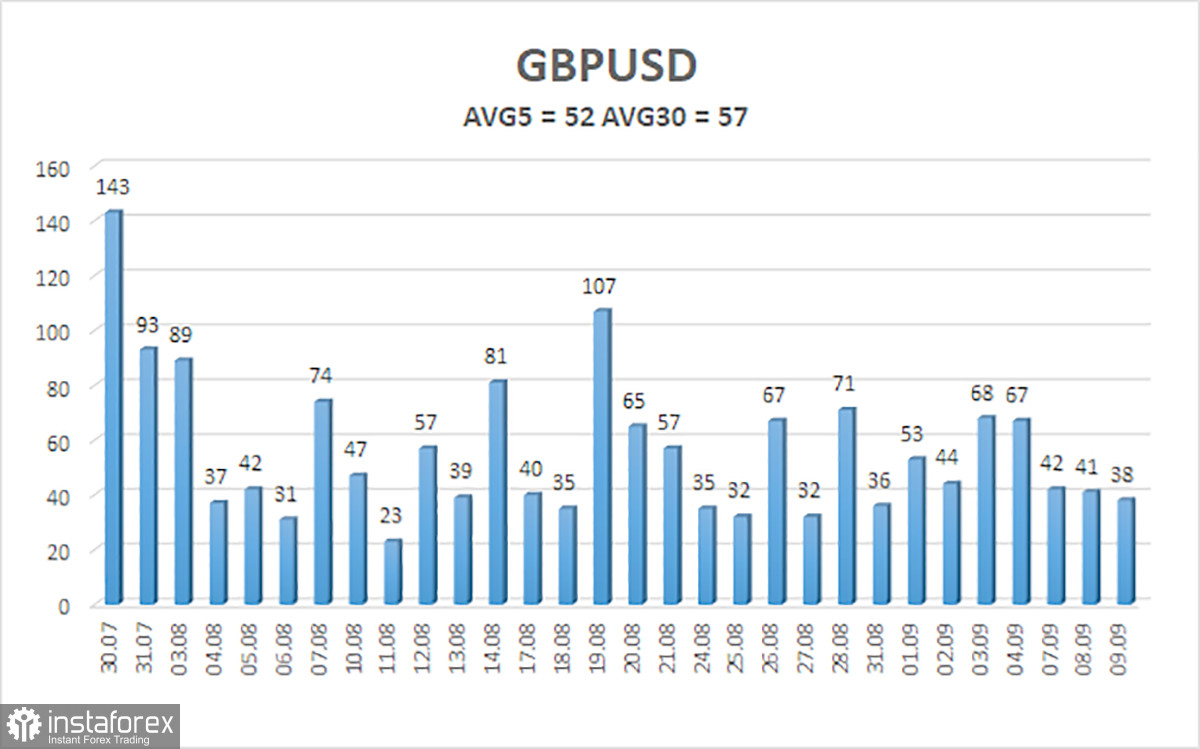
Average volatility of GBP/USD over the last 5 trading days is 52 pips — "low" for the pound. On Thursday, September 10, we therefore expect movement within the 1.3495–1.3599 range. The major linear-regression channel has turned up, indicating an uptrend. The CCI entered oversold territory, warning of a possible end to the correction.
S1 – 1.3489
S2 – 1.3428
S3 – 1.3367
R1 – 1.3550
R2 – 1.3611
R3 – 1.3672
GBP/USD retains an upward tendency. Trump's policies will continue to pressure the US economy, so we do not expect long-term dollar strength. 2026 has been positive for the dollar due to geopolitics, but every story has an end. On the weekly TF, the pair remains flat between 1.3150 and 1.3780 within a four-year uptrend, allowing for expectations of continued pound gains in the medium term. Consider long positions with targets at 1.3599 and 1.3611 when price is above the moving average. Price below the moving average allows shorts with targets at 1.3495 and 1.3489.
Regression channels help determine the current trend. If both are directed in the same direction, it means the trend is currently strong;
The moving average line (settings 20,0, smoothed) defines the short-term trend and the direction in which trading should be conducted at present;
Murray levels are target levels for moves and corrections;
Volatility levels (red lines) are the probable price channel within which the pair will spend the next 24 hours based on current volatility indicators;
The CCI indicator – its entry into the oversold area (below -250) or the overbought area (above +250) indicates that a trend reversal in the opposite direction is approaching.

