
আরও দেখুন


 15.09.2026 10:17 AM
Derivatives on the CME now price in about a 92% probability of a Fed rate hike on Wednesday, up from 87% on Friday. The 10?year Treasury briefly pierced the psychological 5% threshold — the so?called "fateful five" — for the second time since 2007 before retreating. The drivers remain the same: an escalation in the Middle East is pushing oil higher, and inflation data have strengthened conviction that the Fed will tighten monetary policy this week. The S&P 500 is struggling in September, historically the weakest month for stocks.
P/E dynamics and interest rate expectations
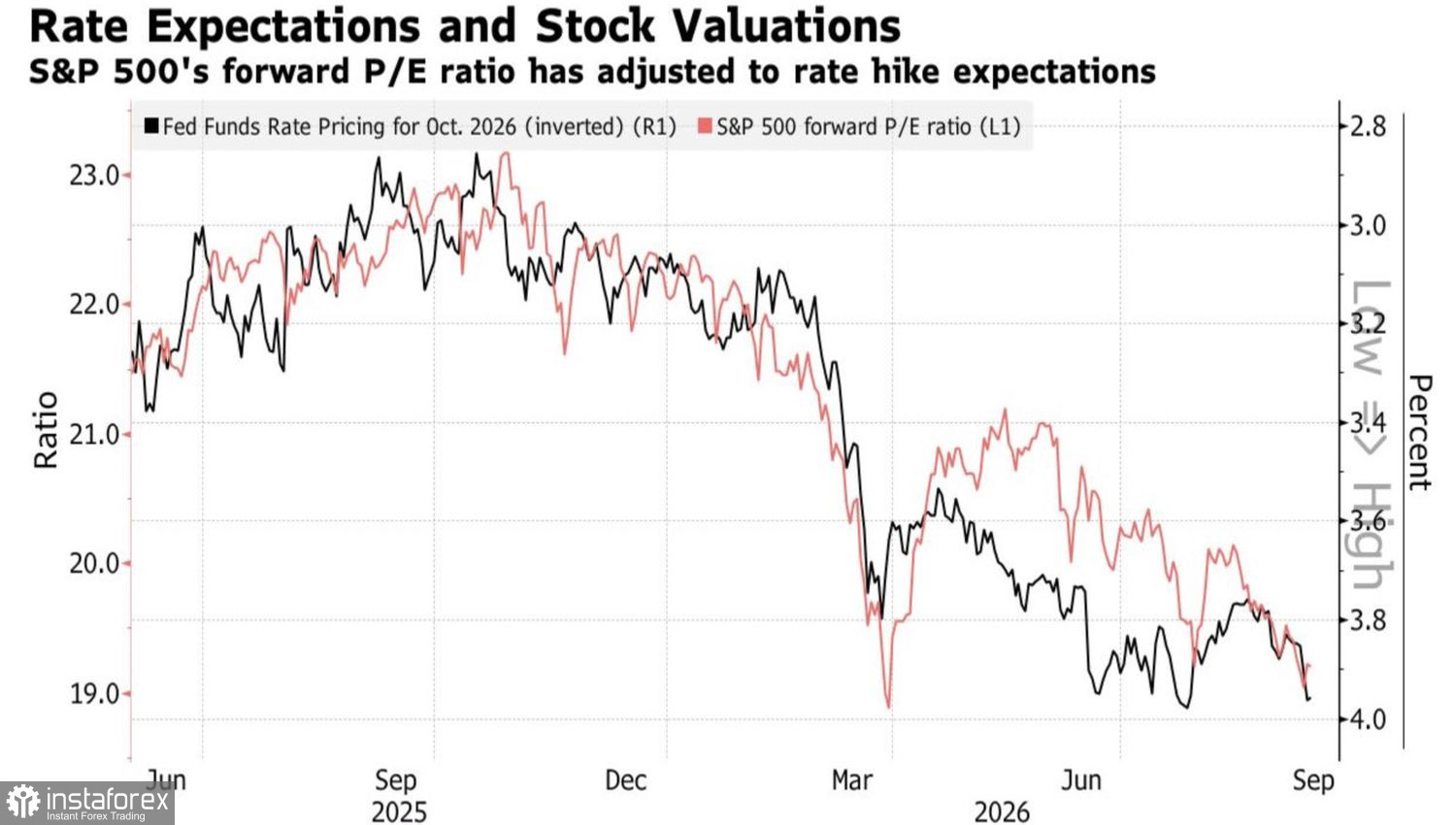
Nervousness was amplified by Anthropic's call to slow AI development. Investors did not wait to see whether industry leaders would follow. Chipmakers and data?center operators were hit, while cybersecurity firms and software developers — whose business models AI could theoretically disrupt — rose. The biggest tech giants reacted mutedly: Amazon fell less than 1%, Microsoft was essentially flat, and Alphabet even gained, suggesting the market does not yet view an AI slowdown as a universal threat.
At the same time, Wall Street's top strategists aren't rushing to abandon bullish positions. Stocks usually suffer when the Fed begins to hike, but Goldman Sachs still expects the bull market to continue. CME futures imply more than three hikes this cycle, yet corporate earnings and balance sheets remain robust. Bloomberg's analysis shows that, of 12 bear markets since 1945, only a full tightening cycle that precipitates a recession truly breaks an uptrend — a one?off hike rarely does. Morgan Stanley allows for a roughly 10% S&P 500 correction only in the event of a stronger inflation shock, while JPMorgan points out that the dominant current risk factor is oil.
S&P 500 forecasts
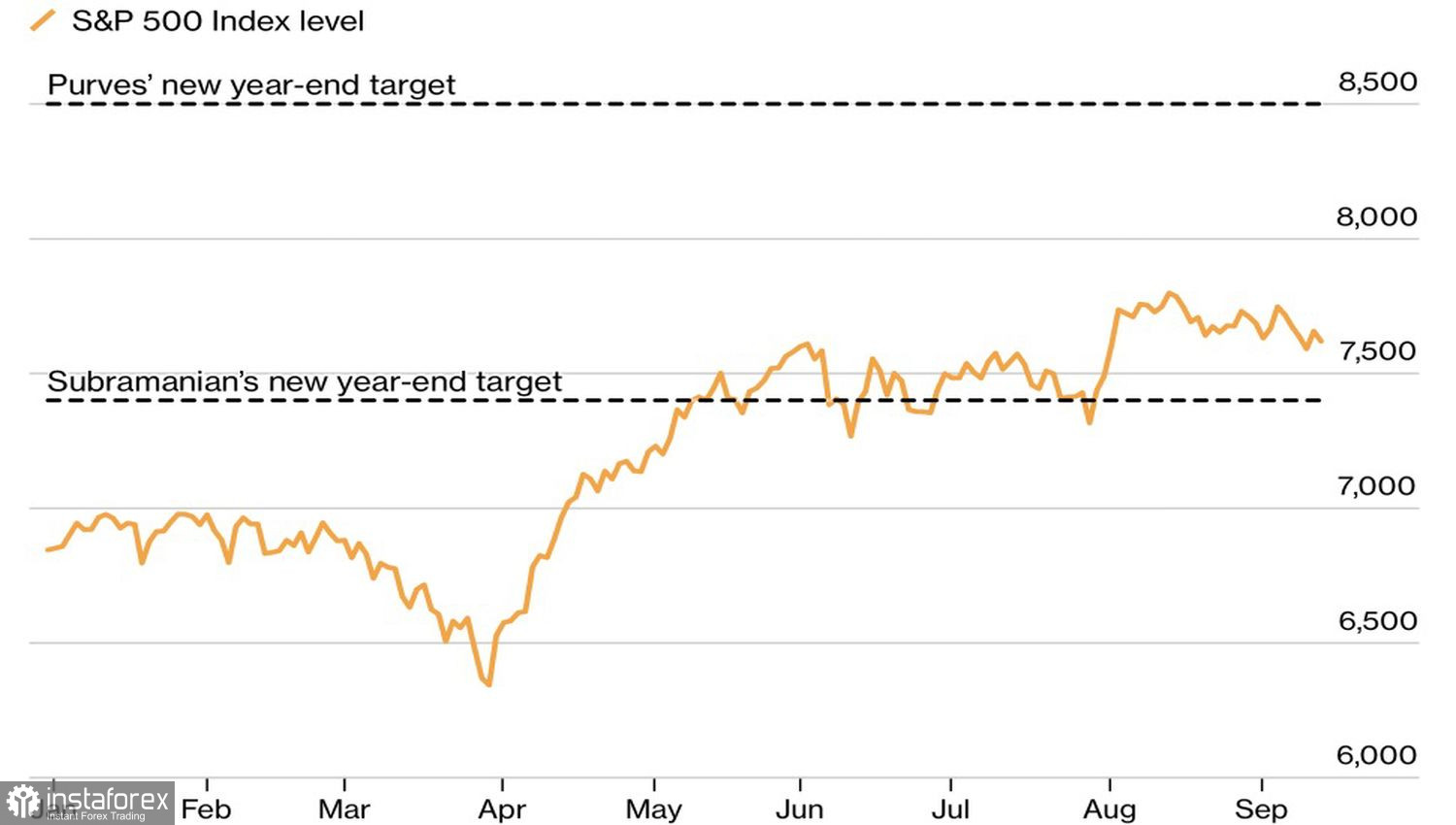
Year?end targets are more dispersed than ever. BofA holds one of the most bearish Wall Street targets at 7,400 — nearly 3% below current levels — while Tallbacken raised its target to 8,500, citing exceptional profit growth and beating even prior record forecasts.
Then there's seasonality. In the 40 years before midterm elections, the S&P 500 has on average fallen 2.4% from early July through the month before the vote. Yet once results become clear, tension typically eases and stocks tend to recover in the final four weeks before election day.
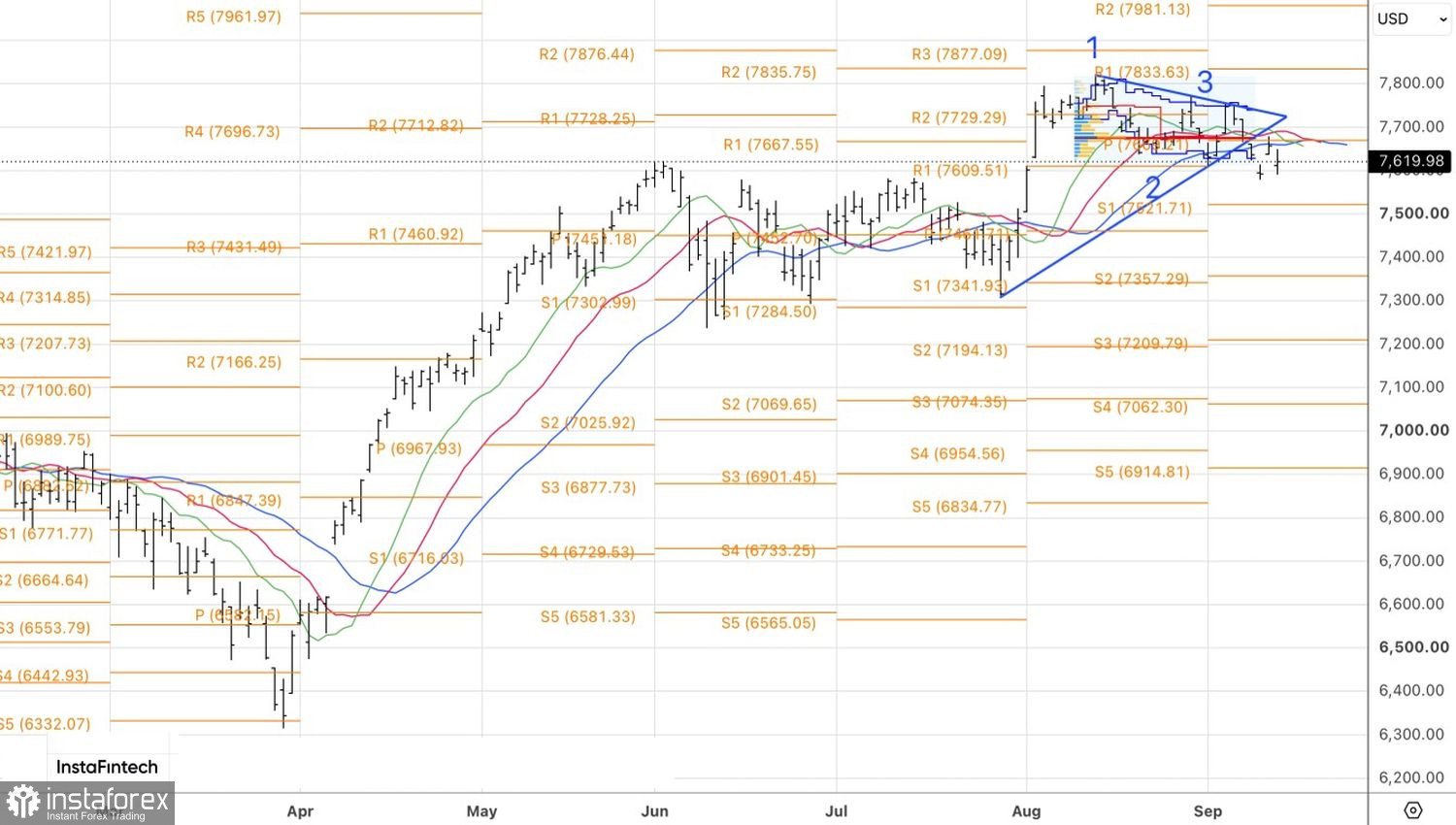
Technically, the daily S&P 500 chart shows a cluster of mixed bars with price gaps, signaling rising uncertainty and justifying placing pending orders. Consider selling from 7,580 and buying from 7,675.
You have already liked this post today
*এখানে পোস্ট করা মার্কেট বিশ্লেষণ আপনার সচেতনতা বৃদ্ধির জন্য প্রদান করা হয়, ট্রেড করার নির্দেশনা প্রদানের জন্য প্রদান করা হয় না।


