
Смотрите также


 17.09.2026 04:39 AM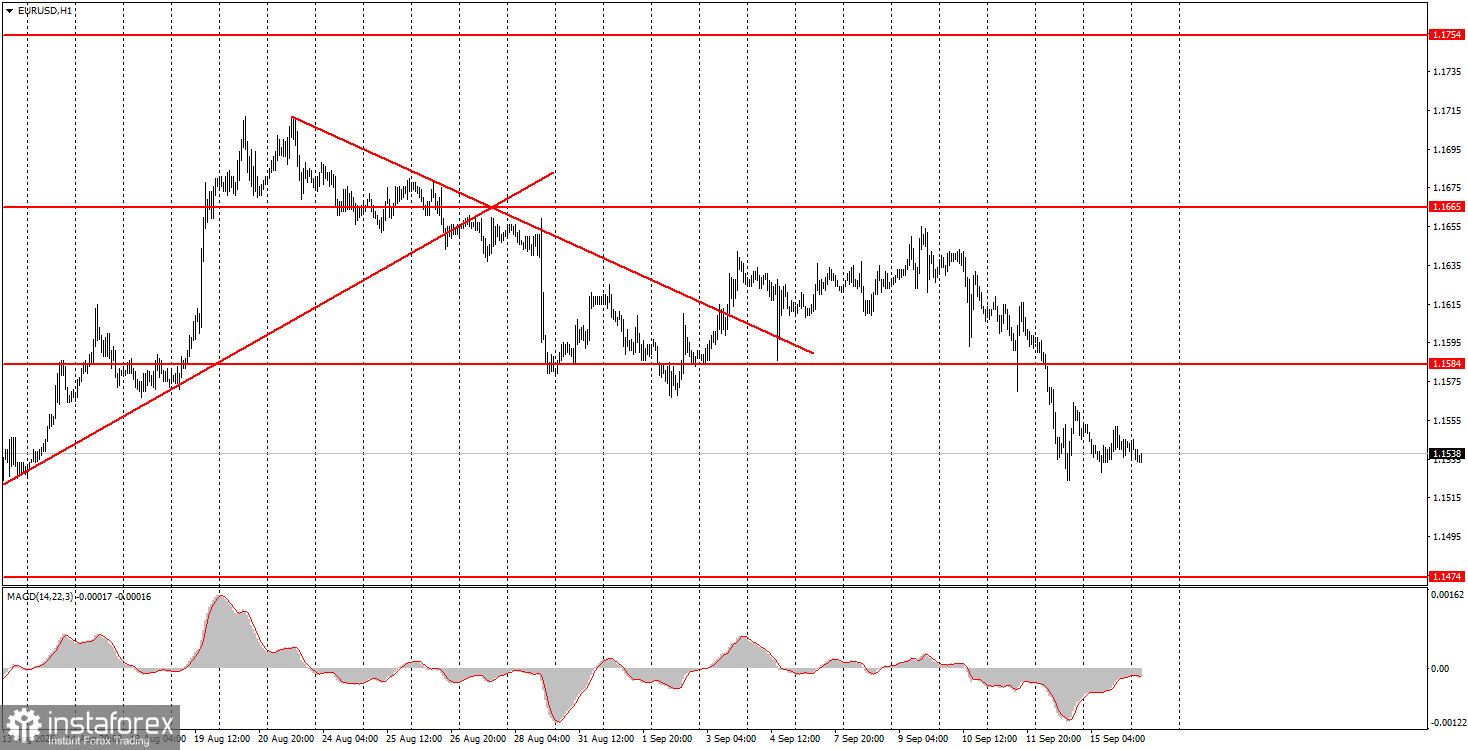
The EUR/USD currency pair plunged like a stone on Wednesday evening. Traders expected Federal Reserve tightening, but no one could have guessed the US central bank would take such a hawkish stance. In effect, the Fed not only raised the policy rate but signaled at least one more tightening before year-end, and most FOMC members fully backed the new chair. Thus, the Fed hiked not as a formality and not to please markets — it has truly committed to fighting high inflation and is ready to keep tightening until inflation returns to 2%. That hawkish stance allowed the dollar to continue strengthening even though it had already risen during the prior five days on tightening expectations. In short: the dollar rose first on expectations and then on the facts. As we warned earlier, the market may simply have been looking for any excuse to buy the US currency — and it found that excuse on Wednesday evening.
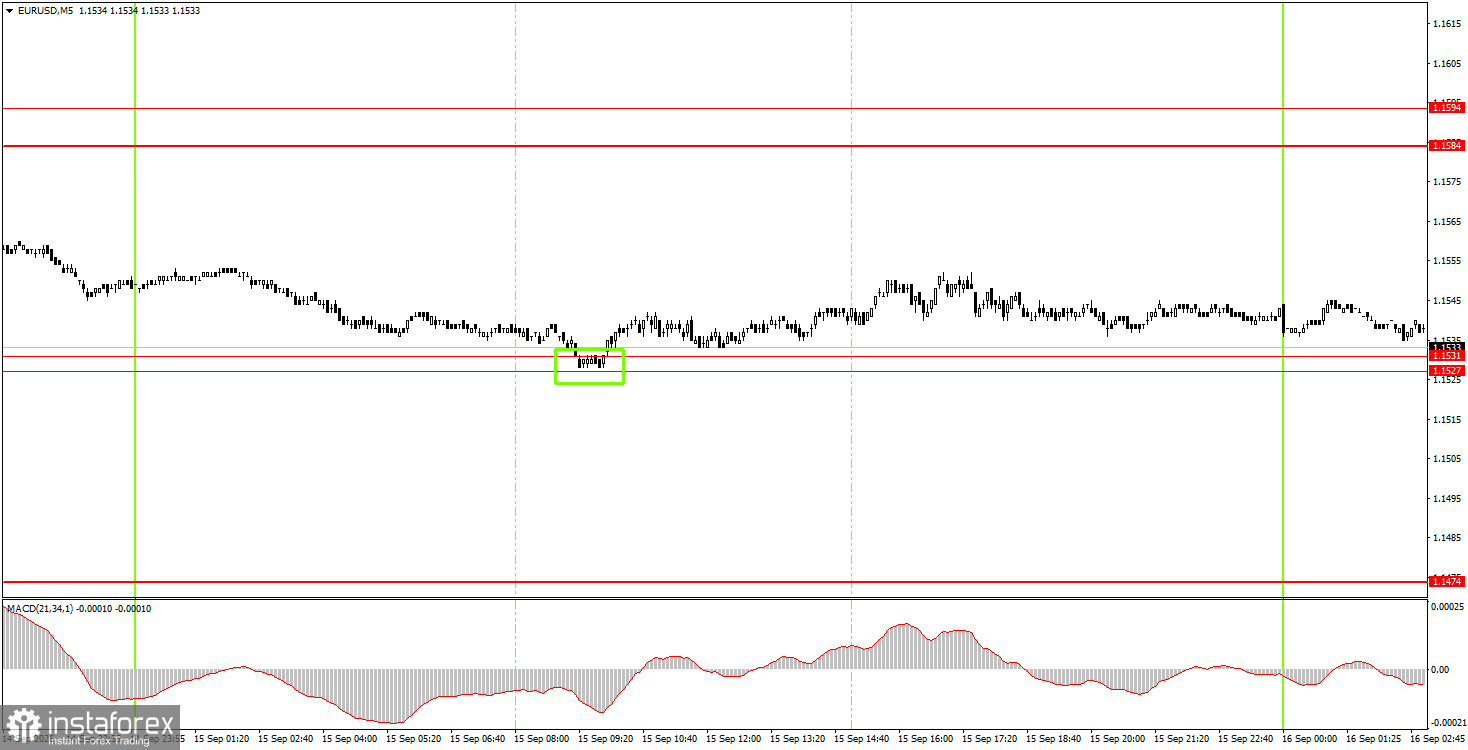
On the 5-minute timeframe on Wednesday, two trading signals were formed. The first buy signal did not push the euro higher, and it made little sense to take a long ahead of the Fed announcement. The sell signal formed on a close below the 1.1527–1.1531 area, and traders could have profitably traded a short position. Given the Fed's stance, that was a sensible move.
On the hourly timeframe, the EUR/USD pair continues a downward move that may now evolve into a full-blown trend. Given recent months' events, we don't think the euro should collapse like a stone — but the market's primary focus is Fed policy, which this week became materially more supportive of the US dollar.
On Thursday, novice traders may open short positions targeting 1.1366–1.1377 if price consolidates below 1.1461–1.1474. Longs can be opened targeting 1.1527–1.1531 in case of a bounce from the 1.1461–1.1474 area.
On the 5-minute timeframe, consider the levels 1.1267–1.1275, 1.1366–1.1377, 1.1461–1.1474, 1.1527–1.1531, 1.1584–1.1594, 1.1655–1.1665, 1.1745–1.1754. On Thursday, the euro area will publish only the final August inflation print, and the US will release several secondary reports. We do not expect any significant market reaction to those releases.
Price levels (areas) of support and resistance serve as targets for opening buy or sell trades or as sources of signals.
Red lines indicate channels or trend lines that show the current trend and the preferred trading direction.
The MACD indicator (14,22,3) — the histogram and signal line — is an auxiliary indicator that can also provide signals.
Important speeches and reports (listed in the news calendar) can significantly influence currency pair movements. Therefore, during their release, traders should approach trading with utmost caution, or exit the market to avoid sudden reversals against the preceding move.
Beginner forex traders should remember that not every trade can be profitable. Developing a clear strategy and practicing money management are key to long-term success in trading.


