
Дивіться також


 17.09.2026 05:30 PM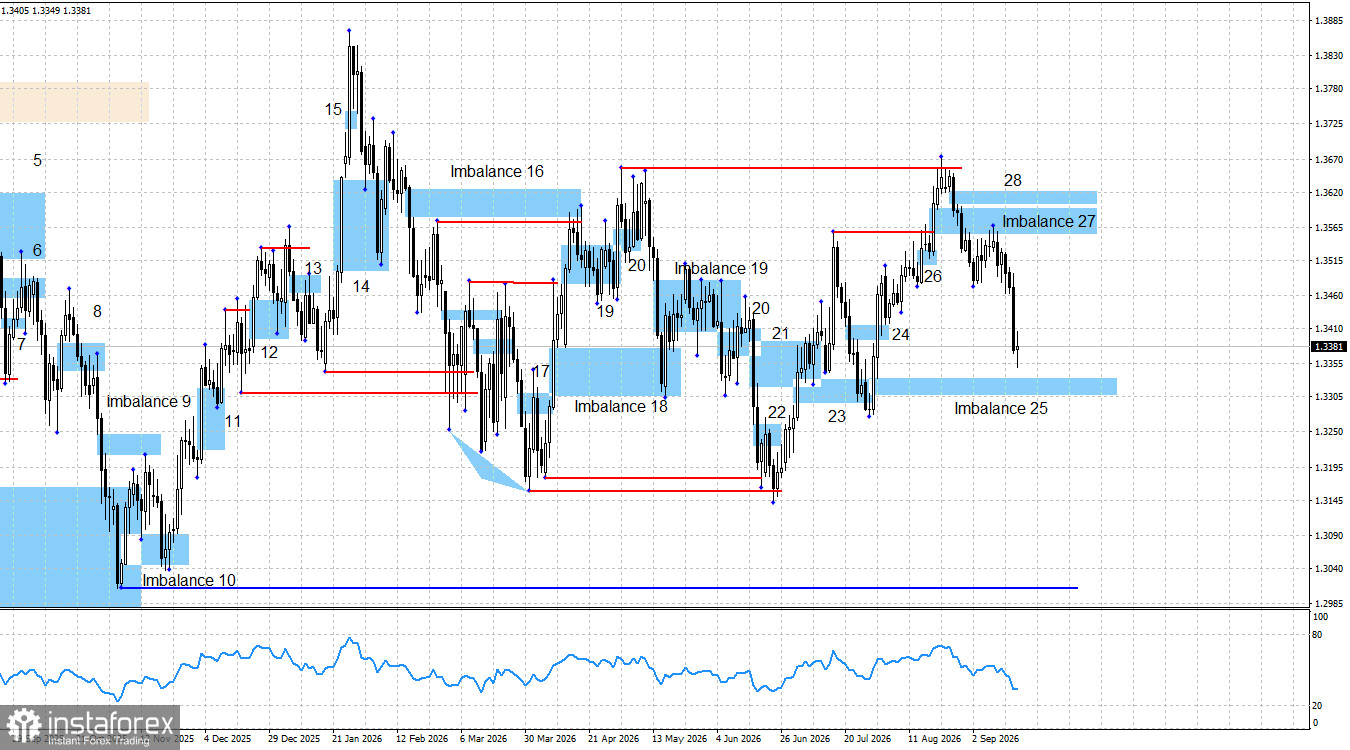
The GBP/USD pair has lost its bullish momentum, and at present, the chart picture looks as though the pound will continue to decline. The price reacted to bearish imbalance 27, which allowed traders to open short positions and created new, less-than-optimistic prospects for the pound. Yesterday, the Fed tightened monetary policy, while today the Bank of England once again took a neutral stance, leaving the door open to a rate hike. However, the open door did not satisfy traders. The ECB has already gone through two rounds of policy tightening, the Fed one, while the Bank of England expects inflation to rise to 4% and remains on the sidelines while its counterparts take more decisive action. Thus, the pound once again had no chance of winning today and may strengthen slightly only on a corrective pullback.
Despite the unfavorable picture for the British pound that has developed in recent weeks, the dollar has also suffered many blows in recent months, including several significant setbacks. If the Fed had not decided to raise the interest rate in September and signaled its readiness to tighten policy at least once more before the end of the year, I would still expect the U.S. currency to decline. I still expect this, but from lower levels. Imbalance 25 plays the same role for the pound as imbalance 19 does for the euro – the role of the last hope and support. If both European currencies consolidate below these patterns, nothing will be able to hold back the bears. There are still chances for growth to resume within the annual ranges, but they will not last forever.
Do the bears have prospects at the moment? In my view, there are few, but it should be acknowledged that the dollar has entered a favorable period. The Fed not only decided to raise rates but also signaled to traders its readiness to continue tightening. I do not believe that a prolonged decline in GBP/USD can be driven by this factor alone; however, in recent weeks the market has done little other than price in the FOMC rate hike. What could prevent it from buying the dollar for several more weeks against the backdrop of the Fed's monetary policy tightening?
Negotiations between the United States and Iran have failed once again and are no longer taking place. From time to time, Iran and the United States exchange strikes, threats, and ultimatums, which have no effect on resolving the conflict and ending the war. No one can currently predict how much longer the conflict will continue. However, if it intensifies and escalates, the dollar may receive an additional supportive factor.
Chart analysis shows that the picture changed from bullish to bearish within just a few days after liquidity was taken from the May highs. The pound reacted to bearish imbalance 27, which triggered a new decline in prices. Imbalance 25 may serve as the target of the decline. In addition, a new bearish imbalance may be formed by the end of today's trading session, and the bears may subsequently receive another opportunity to open short positions.
The economic backdrop on Thursday did not support the British pound. The Bank of England once again took a neutral stance, did not raise rates, made no announcements regarding monetary policy tightening, and the number of hawks on the MPC remained unchanged from the previous meeting and was in line with traders' expectations. Thus, the bulls did not receive sufficient motivation for a counterattack today.
The overall information backdrop remains such that, in the long term, I cannot expect anything other than a decline in the U.S. currency. The war between Iran and the United States has not changed my long-term expectations. Geopolitics forced the market to remember the dollar's safe-haven status for several months, but the conflict has already passed its most active phase. The future of FOMC monetary policy remains ambiguous, while the market itself continues to expect only tightening, which is the main reason for the bears' positive sentiment. In my view, any rise in the dollar is temporary and driven by short-term factors. I would also note that GBP/USD has been trading within a range for an entire year. A range allows traders to expect virtually any movement within its boundaries. Traders have so far been unable to break out of the range.
News calendar for the United States and the United Kingdom:
On September 18, the economic events calendar contains two entries, both of which can be considered of little significance following the meetings of the two central banks. The impact of the economic backdrop on market sentiment on Friday may be limited.
GBP/USD Forecast and Trading Tips:
The long-term picture for the pound remains bullish. In recent weeks, the bears have taken control of the initiative, and all recent bullish patterns have been invalidated. The removal of liquidity from the May 1 swing allowed the decline to begin; a sell signal was formed within inverted imbalance 27, and another bearish signal was formed in imbalance 27 last week. Thus, traders can now keep their short positions open, and there is room for further declines in both the euro and the pound. The current target for the pound is the 1.3307–1.3333 level. Another bearish imbalance may be formed by the close of today's trading session, while imbalance 25 will attempt to halt the bears' advance and save the bulls from embarrassment. The information backdrop is not sufficiently favorable for the dollar for the pair's decline to continue below imbalance 25.


