
Shuningdek qarang


 10.09.2026 11:44 AM
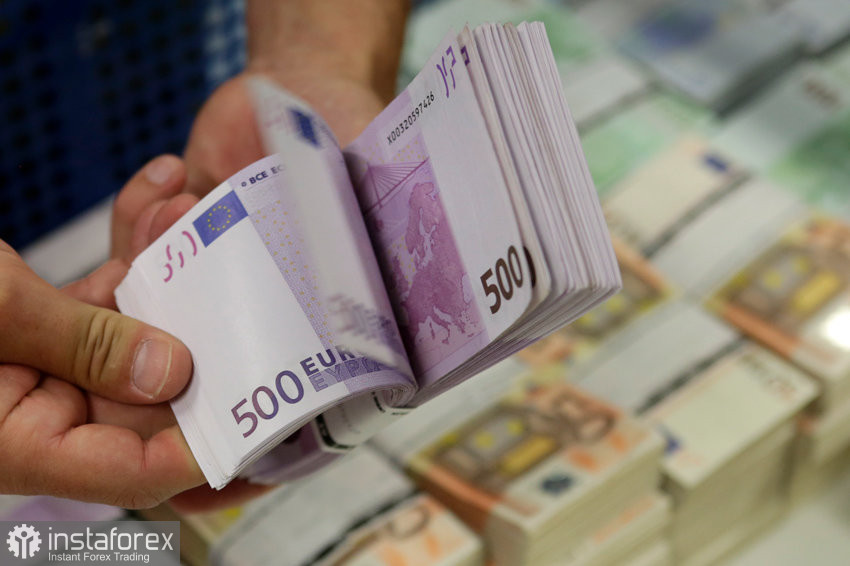
The European Central Bank will raise the deposit rate by 25 basis points to 2.5% on Thursday. The decision will be announced at 15:15 Moscow time, and Christine Lagarde will hold a press conference half an hour later. The meeting is being held outside the Frankfurt headquarters, an annual practice for the central bank.
This increase will be the second since the onset of the Iran war, which has driven up energy prices, and it will cement the ECB's status as the most hawkish G7 central bank. Inflation in the euro area has already topped 3%, near a nearly three-year high, and no substantial retreat is expected in the months ahead. Recall that the ECB raised rates in June independently of the Fed and the Bank of England.
The real intrigue, however, is not the decision itself but what comes next. Markets price two or more additional hikes, while economists remain skeptical. Goldman Sachs sees a near-term rise this week as likely but notes huge uncertainty over the outlook and signs of division on the Governing Council.
That division has become public and centers on the question of where neutrality ends. Gediminas Shimkus of Lithuania said a rise to 2.5% would be insufficient to return inflation to 2%, citing stronger growth. Executive Board member Piero Cippollone, by contrast, warned against over-tightening to avoid economic damage.
A particularly curious debate concerns the boundary of neutrality itself. The 2.5% mark is widely regarded as the upper limit of a neutral range, beyond which activity begins to slow; chief economist Philip Lane has previously cited that figure.
Perhaps the most notable objection comes from outside the ECB—Bundesbank President Joachim Nagel. He urged policymakers to account for the recent global rise in bond yields, which complicates the situation even though tighter financial conditions are helping the ECB contain inflation. In plain terms, markets have already done part of the tightening for the central bank, and additional policy action risks compounding that effect.
Here one finds a methodological problem that must be stated directly. The new quarterly projections around which the debate will swirl were prepared on an August cutoff and therefore do not incorporate the latest jump in sovereign yields or the surge in energy prices. I am convinced this is a critical flaw: the Governing Council will be making decisions on a worldview roughly a month old even as Brent approaches $102 and European gas hits 2023-era highs.
Another theme is Lagarde's future; talk of an early departure has intensified. Her remarks after the July meeting were the clearest signal yet that she may not stay until her term ends in October 2027. Pressure on the bank could rise sharply if Isabel Schnabel also exits early—her term runs until late 2027, and she could move to the IMF. The prospect of both departures would create an institutional risk for the ECB that outweighs any single rate decision.
A technical picture for EUR/USD suggests that buyers need to take 1.1650 to target 1.1670. From there 1.1690 is possible, but getting past that without support from major players will be difficult. On the downside, expect serious buying only around 1.1625; if buyers are absent there, it is prudent to wait for a fresh low at 1.1610 or to consider longs from 1.1580.
A technical picture for GBP/USD shows that pound buyers need to clear the nearest resistance at 1.3565 to target 1.3585; breaking above that level will be challenging. The farther target is 1.3600. On a decline, bears will try to seize control of 1.3535. If they succeed, a break of the range will inflict serious damage on bulls and push GBP/USD toward 1.3510 with a prospect of extending to 1.3480.

